
If you run a small business and you're not yet using AI in your daily operations, you're not alone. But with so many courses, tools, and tutorials available, figuring out where to start can be harder than learning the basics. This guide covers some of the best AI courses for small business owners in 2026, including free resources, paid options, and a practical way to build AI fluency without spending weeks learning things you may never use.
Why Small Business Owners Need AI Skills Right Now
The Cost of Falling Behind on AI Adoption
AI use among small businesses is growing quickly. According to the U.S. Chamber of Commerce, 58% of surveyed small businesses said they were using generative AI in 2025, up from 40% in 2024 and 23% in 2023.
That does not mean every business needs to adopt every new AI tool. But it does make AI literacy increasingly useful. Knowing what these tools can and cannot do makes it easier to spot tasks you can speed up, evaluate new products, and decide where AI actually makes sense in your business.
What You Can Realistically Achieve With AI as a Non-Technical Owner
You do not need to understand how a language model works to use one effectively. What you need is enough working knowledge to apply AI to tasks you already do, such as writing emails, drafting proposals, answering customer questions, researching topics, or analyzing basic data.
The realistic outcome of a good AI course is not that you become a developer. It is that you understand how to use AI for useful business tasks, check its work, and recognize when it is the wrong tool for the job.
What to Look for in AI Training for Small Business Owners
Practical Application vs. Theory-Heavy Curricula
One mistake you can make when choosing ai training for small business owners is picking a course designed for data scientists or technical teams when your goal is simply to use AI better at work.
If you want practical business skills, look for training built around real tasks: drafting a product description, responding to a customer, analyzing information, creating a report, or improving an existing workflow.
Templates, exercises, prompt examples, and demonstrations can also help you put what you learn into practice. Some theory is useful, but you do not need a technical AI education to start using these tools effectively.
Time Commitment and Self-Paced Flexibility
You're running a business, so the time commitment matters. A long certification program may make sense if you need deeper expertise, but it is unnecessary if your goal is simply to become more comfortable using AI in your day-to-day work.
Look at the estimated course length before enrolling. Self-paced programs can also make it easier to fit learning around your existing workload.
Industry-Specific Use Cases and Examples
A course built around retail examples may be more useful to a retailer than one focused on software development. When evaluating programs, check whether the examples match your industry or the business function you want to improve.
The course does not have to match your business exactly, but you should be able to see how its lessons apply to work you actually do.
Top Free AI Courses for Small Business Owners
Google AI for Small Businesses
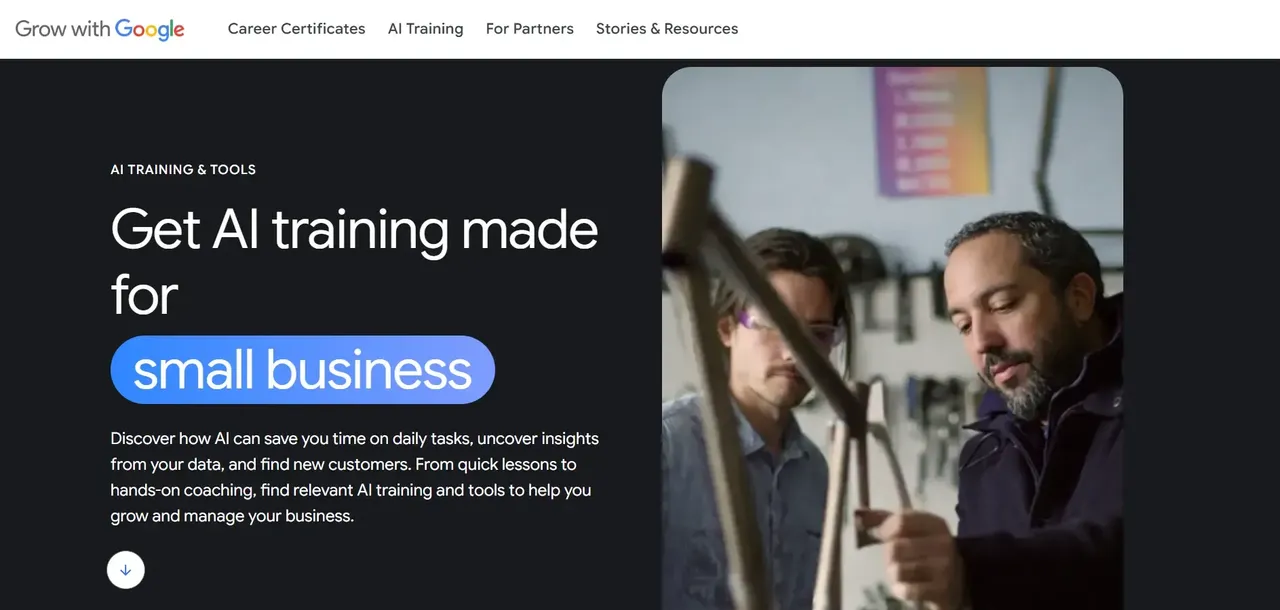
Google offers an AI for Small Businesses collection with training and tools designed to help business owners understand AI and use Google's AI-powered products in everyday work. It covers ways AI can support tasks such as improving productivity, connecting with customers, and running a business more efficiently.
For owners who are completely new to AI, Google's small-business resources are a practical place to explore basic use cases before moving into a longer course.
Microsoft Learn AI Courses for Business Owners
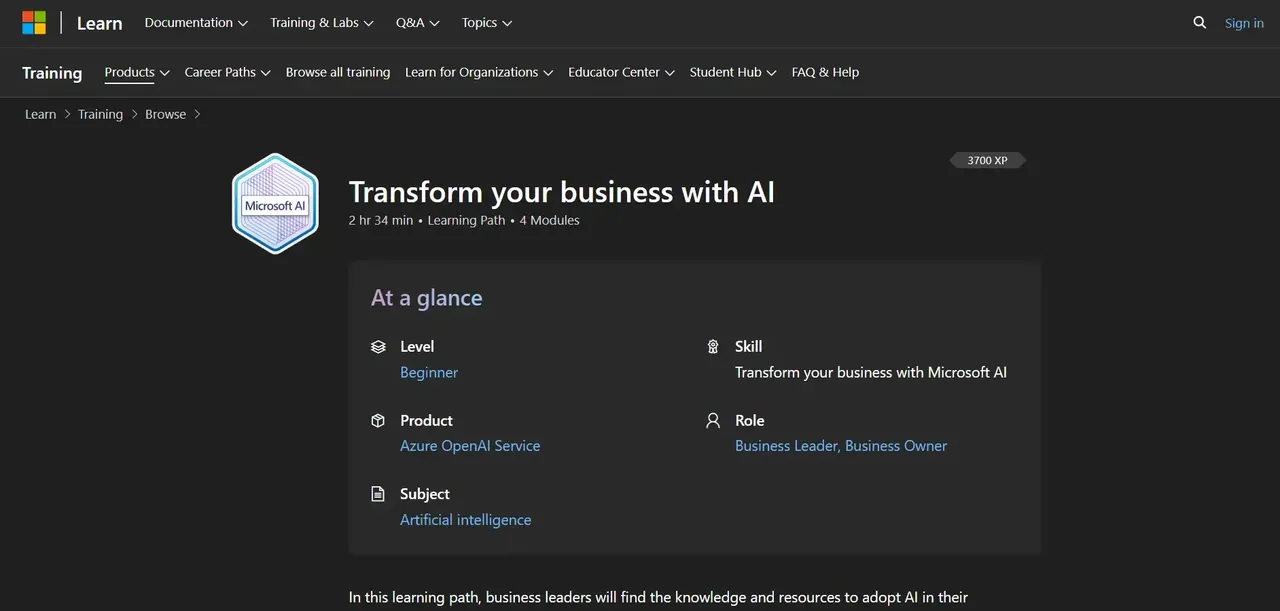
Microsoft Learn has several beginner-level AI learning paths for business users and owners. Its "Transform your business with AI" learning path covers AI concepts, business use cases, responsible adoption, and ways to connect AI projects to business goals.
Microsoft also offers shorter modules on using AI at work and longer learning paths focused on Microsoft 365 Copilot. These are particularly relevant if your business already uses Microsoft products.
HubSpot AI for Marketing Course
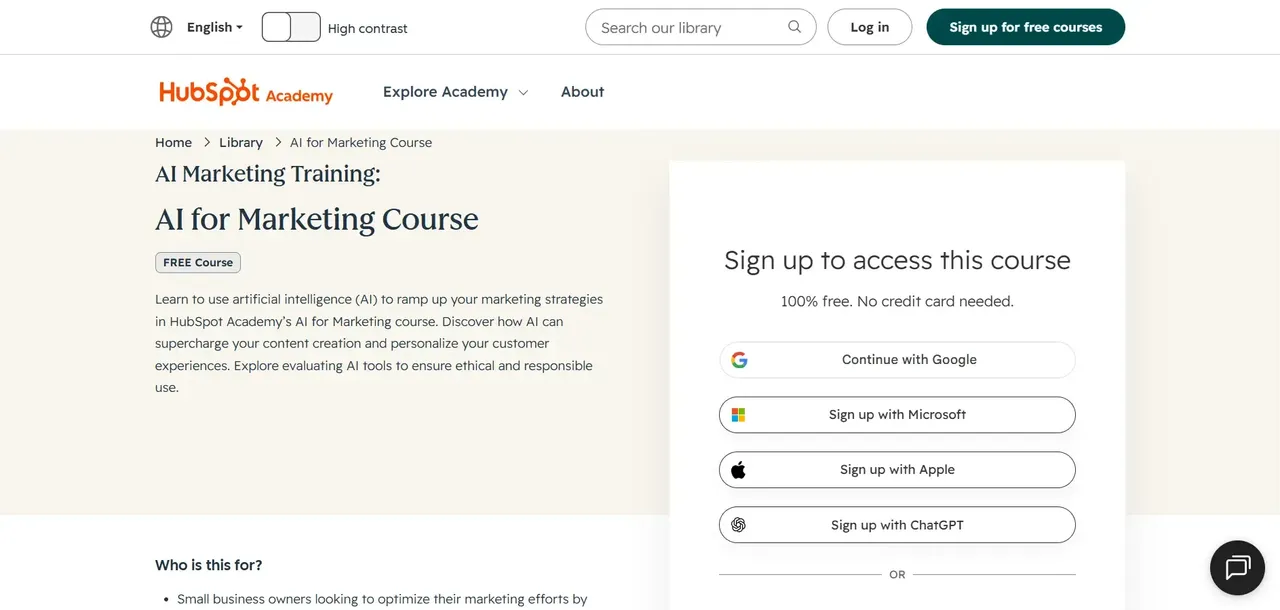
HubSpot Academy offers a free AI for Marketing course designed for marketers and small business owners. It covers prompting, evaluating AI-generated output, content creation, personalization, reporting, and responsible AI use.
If marketing is the main area where you want to use AI, this is one of the more focused free options because the lessons are built around marketing work rather than AI in general.
SCORE AI for Small Business Resources
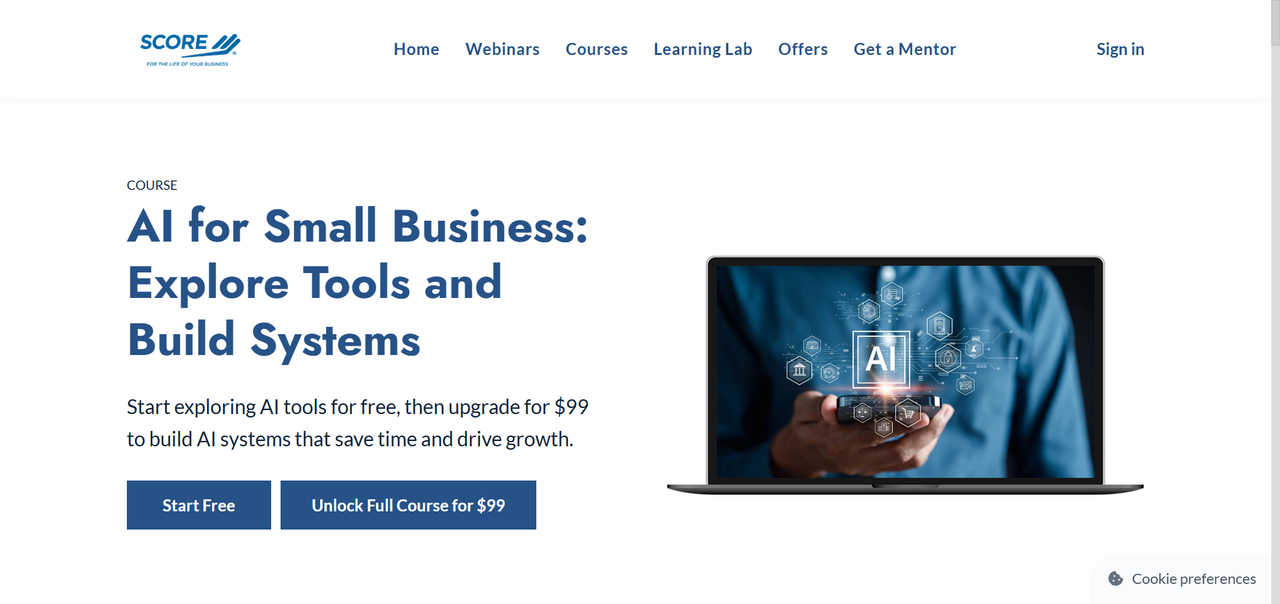
SCORE also offers free AI training for small businesses. Its 2026 "AI for Small Business: Find Opportunities and Take Action" recorded webinar, for example, focuses on identifying useful AI opportunities, assessing whether your business is ready for them, and turning those ideas into practical next steps.
Resources like these can be useful if you want a shorter introduction before committing to a full course.
YouTube Channels and Free Community Resources
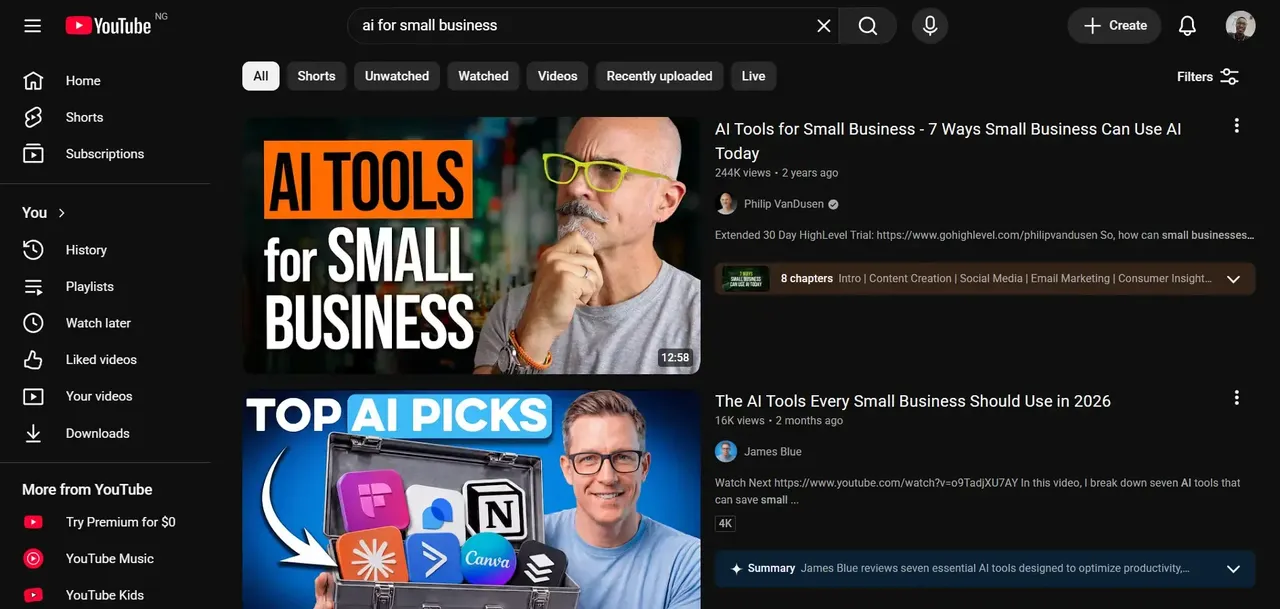
Structured courses are not the only way to learn. YouTube and other free learning resources have tutorials on prompting, AI workflows, and specific tools such as ChatGPT, Claude, Gemini, and Microsoft Copilot.
The main issue is quality. Check who created the tutorial, when it was published, and whether the interface or feature being demonstrated still exists. AI products change quickly, so older tutorials can become outdated.
Best Paid AI Courses Worth the Investment
Google AI Essentials
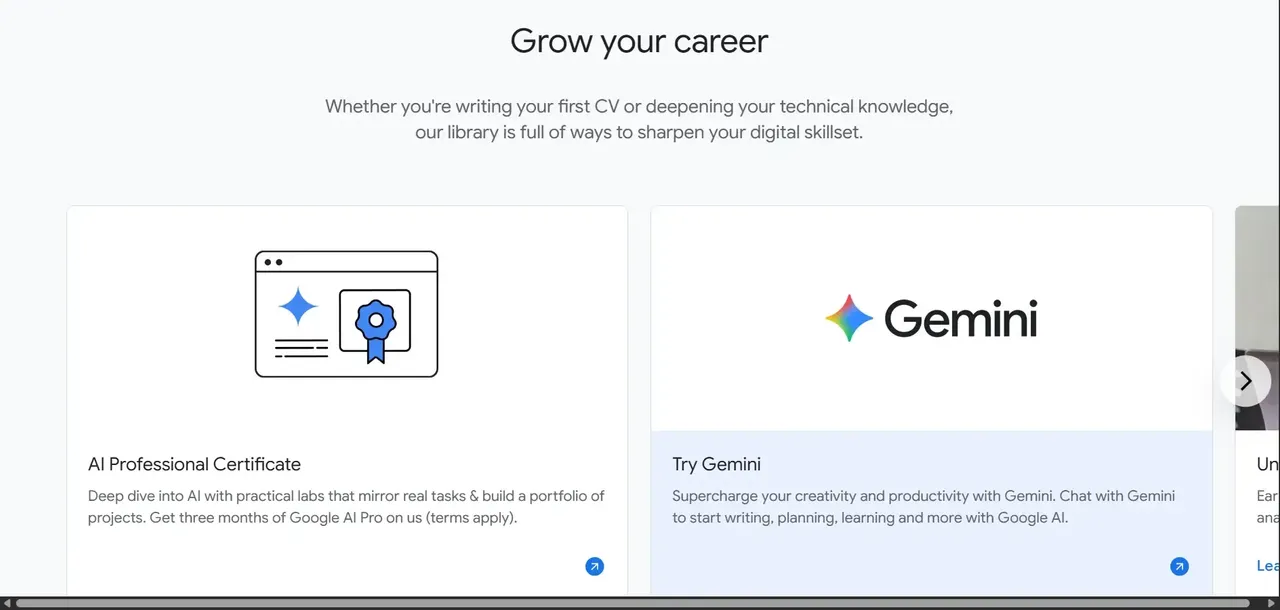
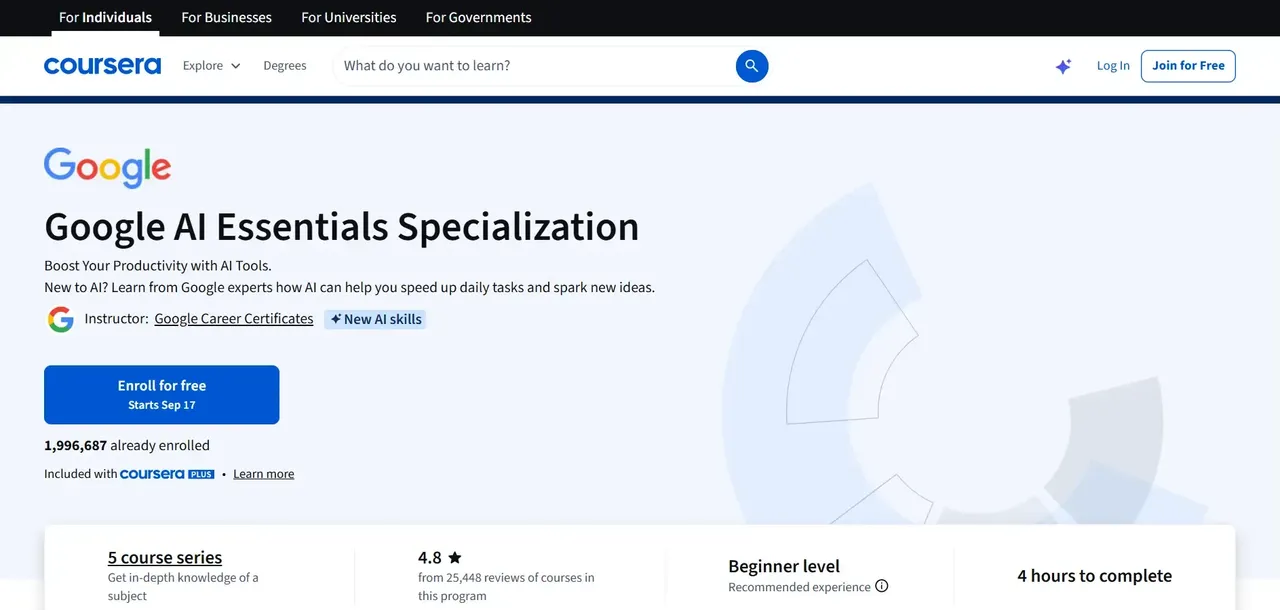
Google AI Essentials is a self-paced beginner course designed for people with no previous AI experience. It covers AI fundamentals, productivity, prompting, responsible AI use, and choosing appropriate AI tools.
Google says the five-module course takes under five hours to complete. It is available through Google Career Skills and Coursera. Pricing varies by country, and Google currently lists a monthly Coursera subscription after a free trial in the U.S. and Canada.
For a small business owner who wants a structured introduction without getting too technical, it is a practical option.
Coursera and edX Business AI Programs
Both Coursera and edX offer business-focused AI courses from universities, companies, and independent course providers.
Coursera, for example, offers business AI programs covering areas such as AI strategy, generative AI, responsible AI, marketing, automation, and business productivity. edX also lists AI-for-business courses covering topics such as AI fundamentals, prompt engineering, analytics, and leadership.
These platforms make more sense if you want structured learning or want to go deeper into a particular part of AI. Pricing, course access, and certificate options vary by program, so check the current terms for the specific course before enrolling.
LinkedIn Learning AI for Business Paths
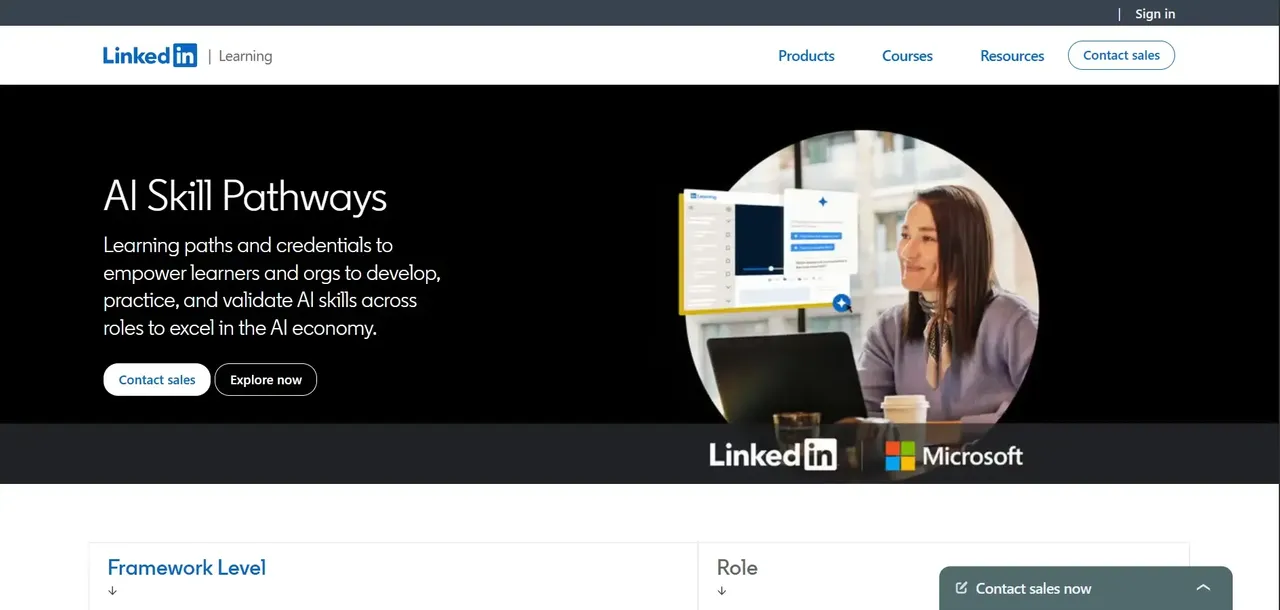
LinkedIn Learning has AI learning paths aimed at different business roles and skill levels. Its current library includes programs for business professionals, managers, marketers, project managers, and organizational leaders.
There is also an AI Boot Camp for Small and Medium-Sized Businesses that covers AI concepts, business tools, responsible use, and planning an AI strategy.
LinkedIn Learning can be useful if you prefer short courses grouped into a structured learning path. Access depends on your LinkedIn Learning subscription, although a trial may be available to eligible users.
Udemy Courses Tailored to Entrepreneurs
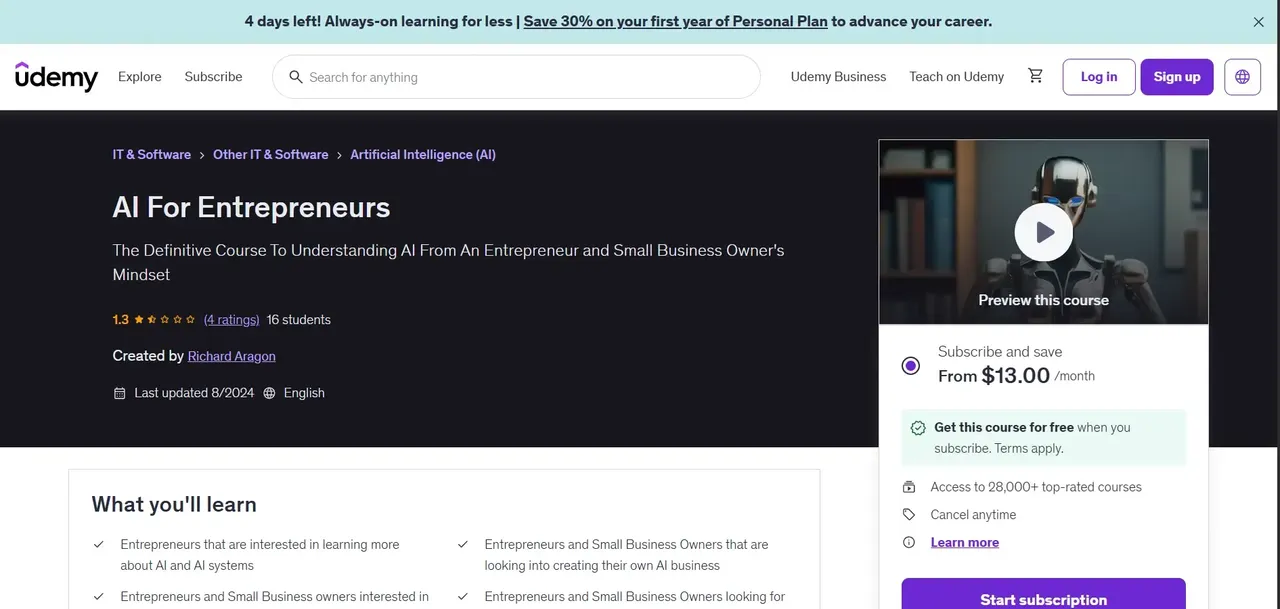
Udemy hosts a large number of AI courses aimed at entrepreneurs and business users. The range gives you plenty of choice, but it also means course quality can vary.
Before buying one, check the syllabus, instructor background, recent reviews, and last update date. AI products change quickly, so a highly rated course can still be less useful if the material has not been updated to reflect current tools and features.
How We'd Choose a Paid Program
Start with the skill you actually want to learn. If you're new to AI, a short fundamentals course may be enough. If you already use AI regularly, paying for another introduction probably won't add much.
For more advanced training, look for programs that teach skills you can carry between tools, such as evaluating AI output, writing clear instructions, designing workflows, handling business data safely, and deciding when AI should or should not be used.
Building AI Fluency for Small Business Owners: Beyond the Basics
Three Practical Levels of AI Fluency: Awareness, Proficiency, and Advanced Use
There is no universal three-level standard for AI fluency, but it can be useful to think about your progress in three stages:
- Awareness: You understand the basic strengths and limitations of AI, have used at least one tool for a real task, and know that AI-generated information needs to be checked.
- Proficiency: You use AI regularly for appropriate business tasks, can write clear instructions, and have repeatable AI-assisted workflows that save you time.
- Advanced use: You can help your team use AI effectively, evaluate new tools, set basic internal rules for AI use, and identify processes that may benefit from deeper automation or custom software.
The point is not to reach a particular label. It is to become better at deciding where AI is useful and using it without creating unnecessary risk.
How to Practice AI Skills Inside Your Own Business
One of the best ways to build ai fluency for small business owners is to apply what you learn to real work.
Pick one recurring task, such as drafting a newsletter, responding to customer inquiries, summarizing meeting notes, or preparing a weekly report. Use AI to help with that task for several weeks and pay attention to where it saves time and where it still needs correction.
Repeated use helps you learn what the tool is good at much faster than simply watching more tutorials.
Measuring Your AI Fluency Progress Over Time
Track two things: time and output quality.
Before using AI for a task, note roughly how long the task normally takes and what a good result looks like. Then compare that with your AI-assisted process.
If you're completing the task faster without reducing quality, the tool is helping. If you're spending most of the saved time fixing mistakes, rethink the prompts, process, or tool you're using.
How to Create a Personal AI Learning Plan as a Small Business Owner
Auditing Your Current AI Knowledge Gaps
Before picking another course, write down the tasks in your business that take the most time or feel unnecessarily repetitive. Then ask which of those tasks could reasonably benefit from AI.
That list gives you a more useful learning agenda than trying to learn everything about AI at once. You may discover that what you actually need is better prompting, spreadsheet analysis, marketing automation, or an understanding of AI privacy rather than another general AI course.
Tracking and Applying What You Learn Immediately
Keep a simple record of what you learn and where you use it. You could track the course or resource, the useful idea you learned, and the task where you applied it.
Over time, this makes it easier to see which AI skills are producing useful results and which tools looked interesting but did not solve a real problem in your business.
Common Mistakes Small Business Owners Make When Choosing AI Courses
Choosing Courses That Are Too Technical or Too Generic
A technical AI course is not automatically better. If your goal is to use AI for marketing or daily operations, a course designed to teach machine learning development may give you far more technical detail than you need.
The opposite problem is a course that stays so general that you finish without knowing how to apply anything. Read the syllabus first and look for lessons that connect to the work you want to improve.
Overloading on Theory Without Hands-On Practice
AI fluency for small business owners comes from using the tools as well as understanding them.
A course should give you opportunities to practice. Exercises, demonstrations, sample workflows, and real tasks make it easier to turn what you learn into something useful in your business.
Ignoring Ongoing Learning After One Course
AI tools change quickly. Features are added, interfaces change, and new products appear while others are discontinued.
That does not mean you need to follow every AI announcement. Check the tools you rely on periodically, keep up with major changes that affect your workflows, and update your process when there is a clear reason to do so.
Skipping Courses on AI Ethics and Data Privacy
Data privacy and responsible use are worth understanding before you start putting business information into AI systems.
Learn what information your AI provider stores, how it may be used, what privacy controls are available, and whether your business has legal or contractual requirements for handling customer information. The rules and protections can also differ between free, individual, business, and enterprise versions of the same product.
Quick-Start Checklist for Small Business AI Learning
- Identify your top three time-consuming or repetitive tasks
- Choose one introductory course or training resource from the options above
- Pick one AI tool that fits the task you want to improve
- Apply what you learn to one real task
- Set aside regular time to practice rather than trying to learn everything at once
- Review whether the tool is actually saving time or improving the work
FAQ
How long does it take to complete AI training for small business owners?
It depends on the course. Some introductory resources take less than an hour, while others take several hours or are spread across multiple weeks.
For example, Microsoft's "Work smarter with AI" learning path takes about 42 minutes, while Google says AI Essentials takes under five hours. More detailed programs and specializations on platforms such as Coursera, edX, and LinkedIn Learning can take considerably longer.
You do not need to finish a long curriculum before applying AI in your business. A short introductory course can be enough to start experimenting with simple tasks.
Are free AI courses good enough, or do I need to pay for training?
Free training can be enough to learn the basics. Microsoft Learn, HubSpot Academy, SCORE, Google, and other providers offer introductory resources that cover practical AI use.
Paid training becomes more useful when you need deeper instruction, a structured curriculum, a particular specialization, or a certificate. Start with free resources if you're new to AI, then pay for training when you can identify a specific skill you need to develop.
How do I know if I have achieved AI fluency for small business owners?
There is no official test for ai fluency for small business owners. A more useful measure is whether you can identify an appropriate AI use case, choose a suitable tool, give it clear instructions, evaluate the result, and decide whether using AI actually improves the task.
You should also understand basic limitations, including the possibility of inaccurate output and the need to be careful with sensitive business or customer data.
Can AI courses help me automate tasks in my small business right away?
They can help you improve or speed up some tasks quickly, but learning to use an AI tool and building full automation are different things.
An introductory course may teach you to use AI to draft content, summarize information, analyze documents, or prepare templates. Automating an entire workflow may require integrations, automation software, AI agents, or custom development, depending on the process.
Do I need to take multiple AI courses, or is one enough to get started?
One good introductory course can be enough to get started. The goal of your first course should be to understand the basics and begin applying them to real work, not to become an AI expert.
Once you start using AI, the gaps in your knowledge become easier to see. You can then take more focused training in areas such as marketing, data analysis, automation, responsible AI, or whatever is most relevant to your business.